The Process
FROM EARTH TO FIRE — FOUR STAGES OF THE HAND-THROWN CERAMIC
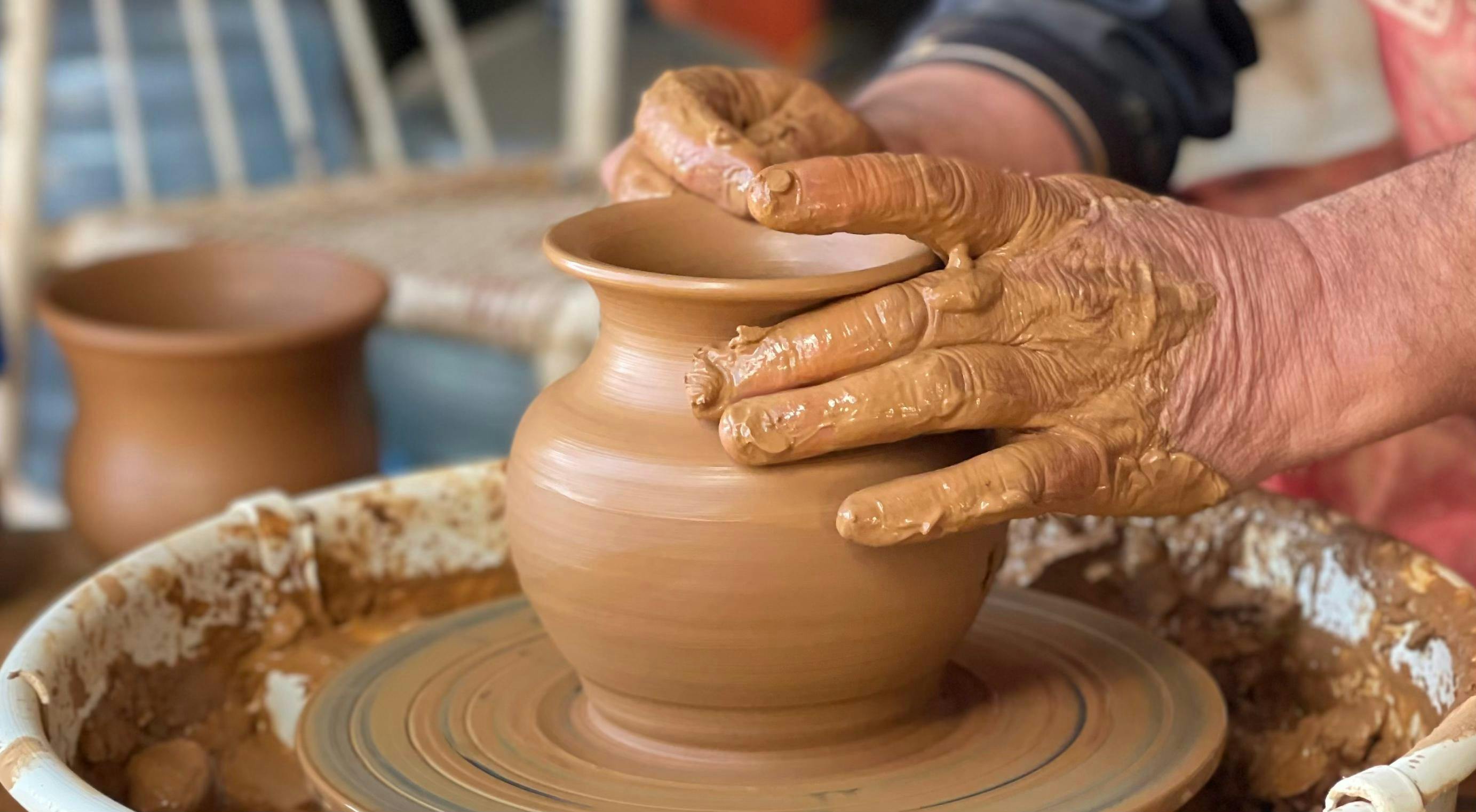
01 — Throwing
Centering the Clay
Every piece begins with a mound of raw stoneware clay centred on the kick wheel. Steady hands open the form, pulling the walls upward with controlled pressure to coax a vessel from the earth. No two throws are identical — the slight irregularities that remain are what make each piece unmistakably hand-made.
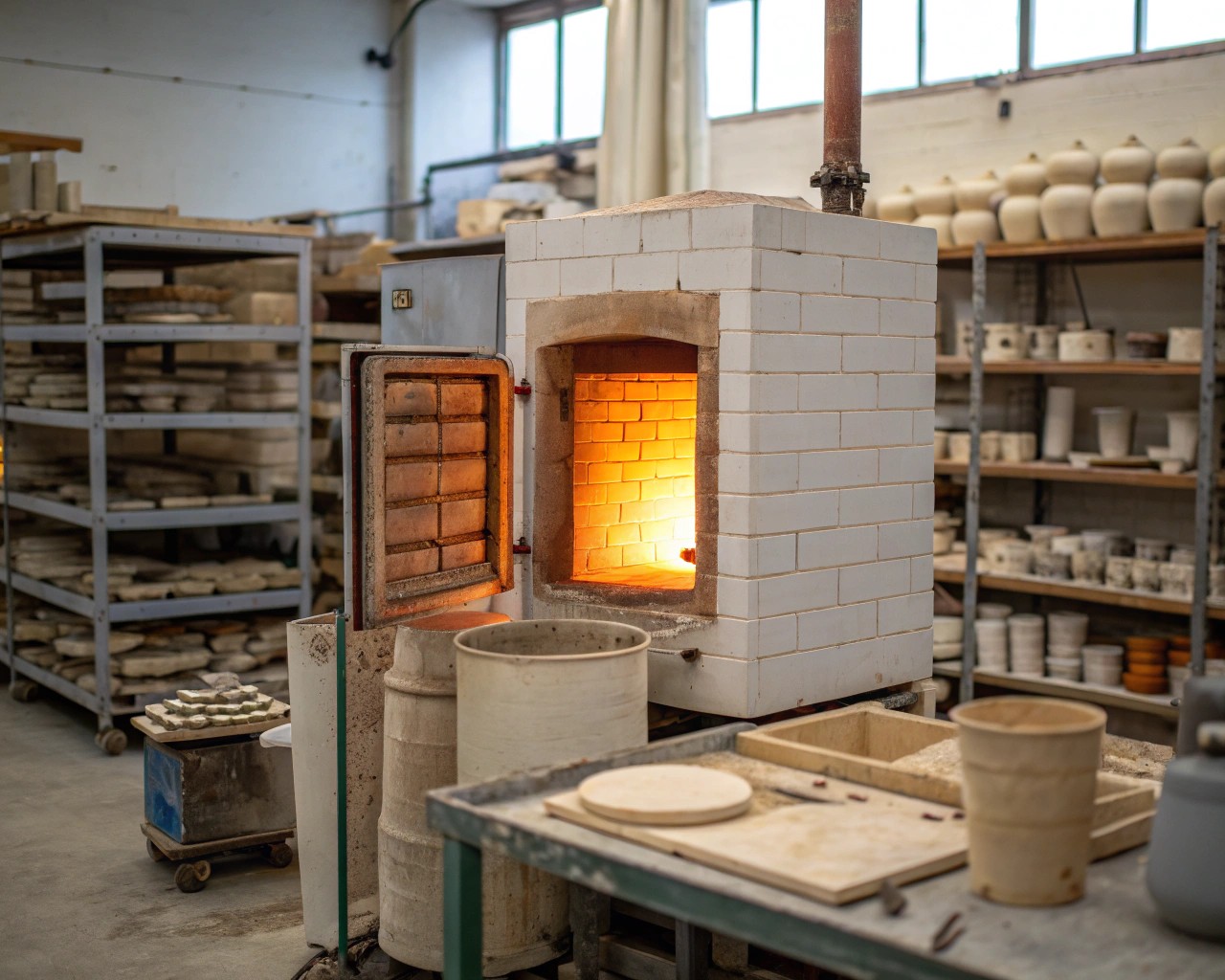
02 — Bisque Firing
First Fire
Once dried slowly to leather-hard, the pieces are loaded into an electric kiln and fired to around 1000 °C. This bisque firing burns away all moisture and organic matter, transforming fragile clay into a porous, stable bisqueware that is ready to accept glaze.
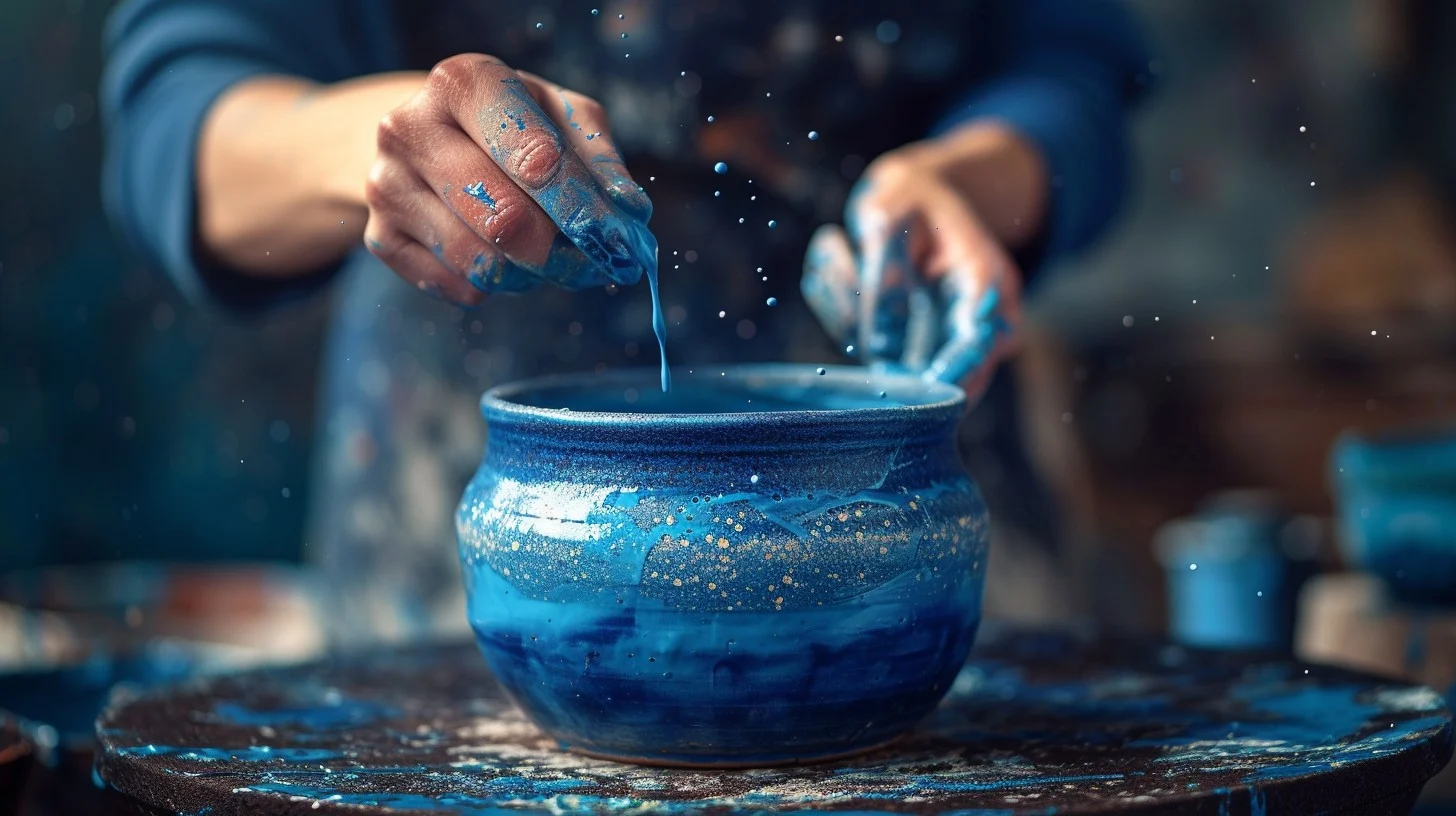
03 — Glazing
A Layer of Colour
Glazes are applied by dipping, pouring, or brushing — sometimes in combination. The raw glaze looks nothing like the finished surface; it is only in the heat of the kiln that the minerals melt and fuse into the luminous, layered colours you see in the final work.
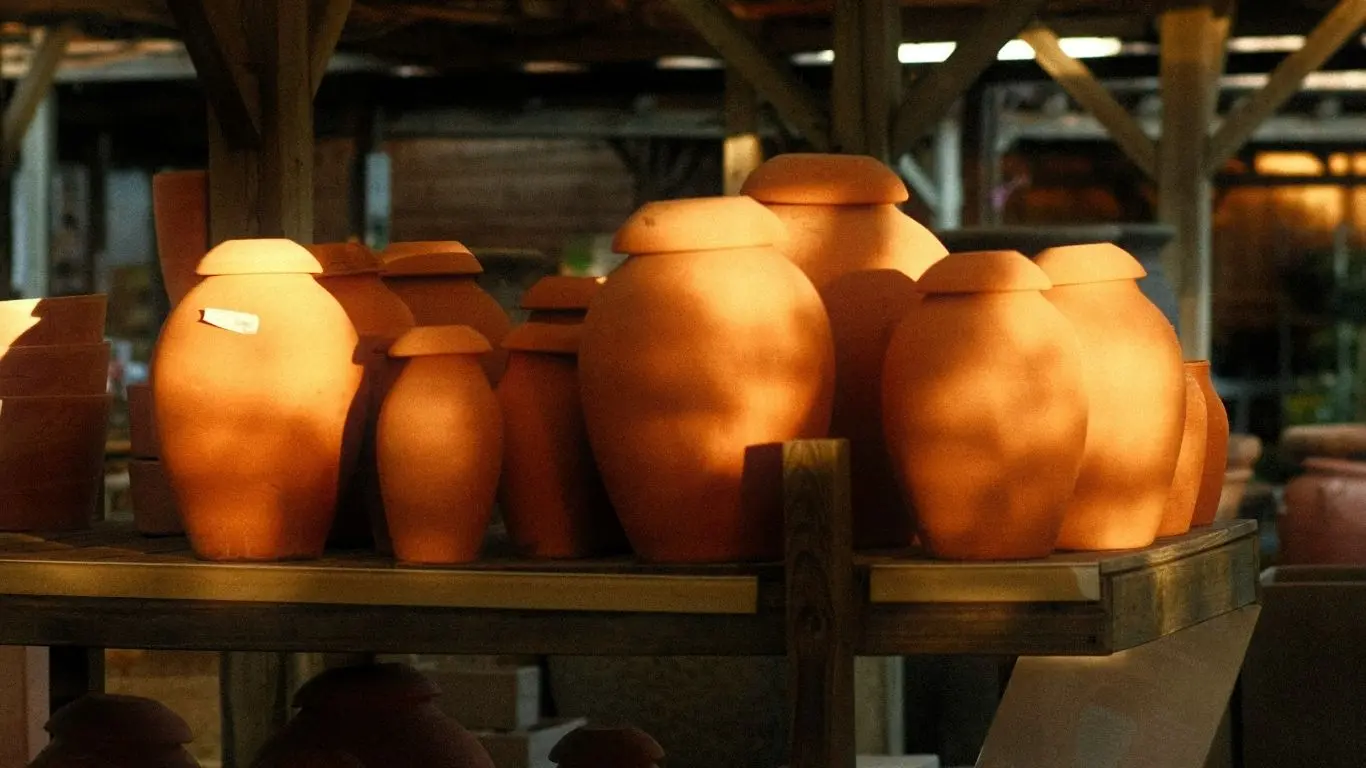
04 — Gas Firing & Reduction
The Reduction Atmosphere
The final firing happens in a gas kiln reaching approximately 1280 °C. At peak temperature the kiln is starved of oxygen — a process called reduction — which pulls oxygen from the metal oxides in the glazes, producing the rich, earthy, flame-marked surfaces that define these ceramics and cannot be replicated in an electric kiln.